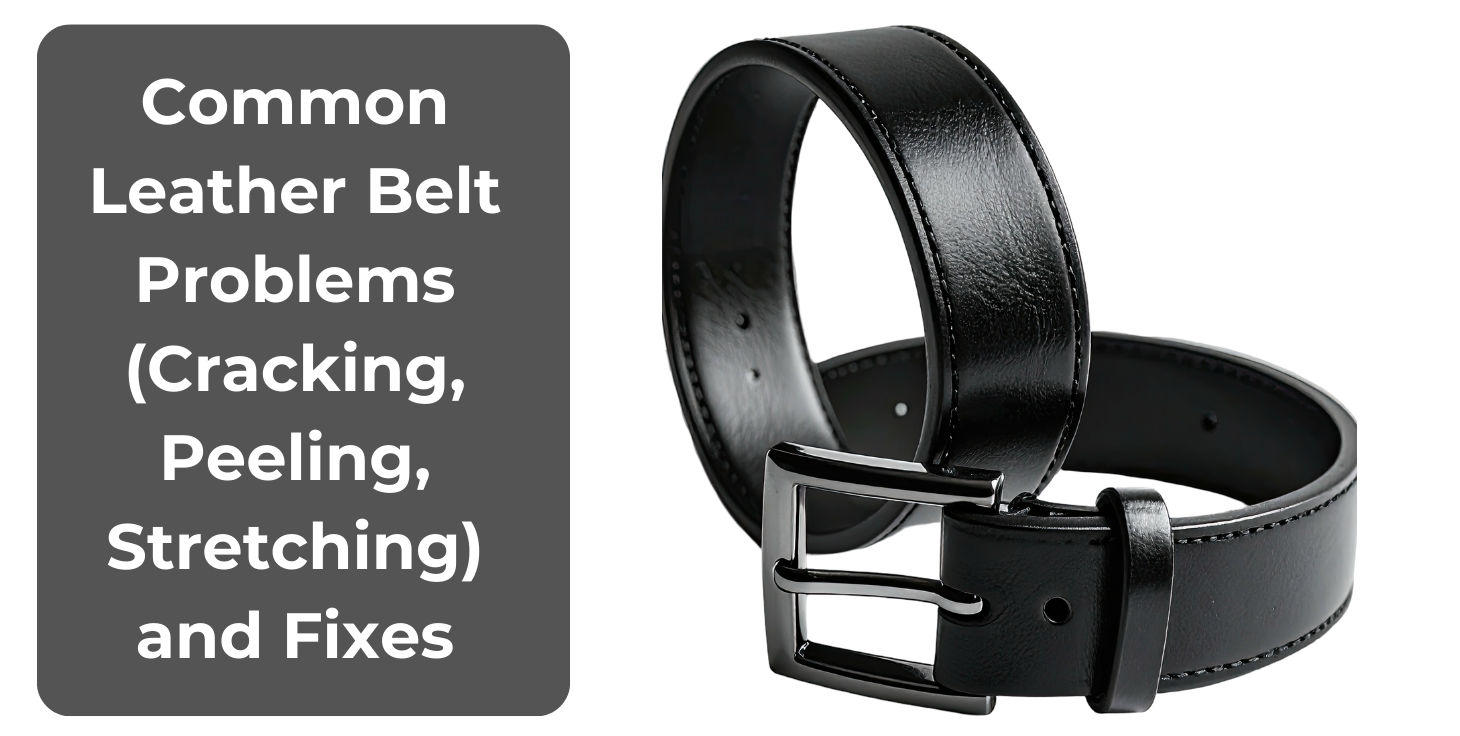
Leather belts are a classic, durable accessory that can last for years with proper care. However, over time, leather belts can encounter several issues like cracking, peeling, and stretching. These problems can arise due to natural wear and tear, improper maintenance, or environmental factors. If you notice your leather belt starting to show signs of damage, it’s important to address the issue early before it gets worse. In this article, we will explore the common leather belt problems, their causes, and how to fix them, ensuring your belt lasts for many more years.
Why Leather Belts Experience Issues
Leather is a natural material that is both sturdy and flexible, but it’s not impervious to damage. Environmental exposure, repeated use, and lack of maintenance can all lead to common problems like cracking, peeling, and stretching. It’s important to understand the causes of these issues so you can prevent them in the future.
1. Cracking Leather Belts
Cracking is one of the most common problems with leather belts. It typically occurs when leather becomes dry and brittle, causing the surface to crack and split. This is often a sign of insufficient conditioning or exposure to harsh elements such as sunlight, extreme temperatures, or moisture.
Causes of Cracking:
Lack of Moisture: Leather needs natural oils to stay supple. When it dries out, it becomes brittle and more prone to cracking.
Environmental Damage: Exposure to direct sunlight, heat, or humidity can dry out the leather and cause it to lose its natural oils.
Overuse: Repeatedly bending or creasing the leather at the same spot can cause cracks to form, particularly around the buckle or holes.
2. Peeling Leather Belts
Peeling is a less common but still significant problem. It usually happens with lower-grade leather or coated leather belts. In these belts, the surface layer starts to peel off, often revealing a thinner, less durable layer underneath.
Causes of Peeling:
Low-Quality Leather: Genuine leather, which is often used in more affordable belts, is typically thinner and more prone to peeling compared to full-grain leather.
Constant Friction: Frequent rubbing or friction in the areas around the buckle or holes can wear down the outer layer of the leather.
Improper Cleaning: Harsh chemicals or excessive water can cause the leather’s outer layer to degrade, leading to peeling.
3. Stretching Leather Belts
Over time, leather belts can stretch, particularly in the areas where they are frequently adjusted around the holes or where the buckle meets the leather. While leather has some natural flexibility, excessive stretching can cause the belt to lose its shape, making it less functional and less aesthetically pleasing.
Causes of Stretching:
Frequent Adjustment: Repeatedly using the same hole or pulling the belt tight can cause the leather to stretch out over time.
Poor Quality Leather: Lower-quality leather may stretch more easily, especially if it has been stretched too much in one spot.
Excessive Wear: The constant pulling of the belt at the waistline can cause it to gradually stretch out, particularly in the areas where the holes are punched.
How to Fix Common Leather Belt Problems
Fortunately, most common leather belt problems can be fixed with the right techniques. Here’s how to address cracking, peeling, and stretching.
1. How to Fix Cracked Leather Belts
If your leather belt is cracking, it’s essential to rehydrate the leather and restore its natural oils. Here’s how to fix it:
Step-by-Step Guide to Fix Cracked Leather:
Clean the Belt: Gently wipe the belt with a damp cloth to remove any dust or dirt. Avoid soaking the leather.
Condition the Leather: Use a leather conditioner to rehydrate the belt. Apply a small amount of conditioner to a soft cloth and rub it into the cracked areas. Make sure to cover the entire belt, paying special attention to the areas with the most cracks.
Allow the Conditioner to Absorb: Let the conditioner sit for 15 to 30 minutes so the leather can absorb it.
Buff the Belt: After the conditioner has absorbed, use a clean cloth to buff the belt and remove any excess. This will help smooth out the leather and restore its natural finish.
Preventing Future Cracking:
Condition your leather belt regularly (every 3–6 months) to maintain its flexibility.
Keep your belt away from direct sunlight and heat sources.
Store your belt in a cool, dry place when not in use to avoid drying out the leather.
2. How to Fix Peeling Leather Belts
Peeling leather belts, especially lower-quality ones, can be more challenging to fix. However, there are steps you can take to restore them or at least prevent further peeling.
Step-by-Step Guide to Fix Peeling Leather:
Clean the Peeling Area: Gently clean the peeling area with a damp cloth to remove any dust or dirt. Be careful not to rub too hard, as this can make the peeling worse.
Apply Leather Dye: If the peeling is minimal, you can apply a leather dye to the affected area. This will help restore the color and mask the damage. Make sure to test the dye on a small, inconspicuous area first.
Recondition the Leather: After applying dye, use a leather conditioner to nourish the belt and prevent it from drying out. This will help improve its flexibility and prevent further peeling.
Preventing Future Peeling:
Use high-quality leather belts to reduce the risk of peeling.
Avoid using harsh chemicals or abrasive cleaners on the leather.
Always store the belt properly, keeping it away from direct sunlight and moisture.
3. How to Fix a Stretched Leather Belt
Stretching is one of the most common problems with leather belts, but it can often be corrected with some basic fixes.
Step-by-Step Guide to Fix Stretched Leather:
Soak the Belt: If your belt has stretched significantly, you may need to moisten it. Lightly dampen a cloth with water and wipe down the entire belt. Be cautious not to soak the leather; it should only be slightly damp.
Reshape the Belt: While the belt is damp, lay it flat and gently reshape it back to its original form. You can use your hands to push the leather back into place, focusing on the areas where it has stretched the most.
Allow the Belt to Dry: Once you’ve reshaped the belt, let it dry naturally at room temperature. Avoid using direct heat to speed up the drying process, as this can cause the leather to crack or warp.
Recondition the Leather: After the belt has dried, apply a leather conditioner to restore its flexibility and prevent further stretching.
Preventing Future Stretching:
Try not to wear the same hole consistently. This will help distribute pressure more evenly across the belt.
Avoid pulling the belt too tight, as this can cause it to stretch out over time.
Store your leather belt flat when not in use to prevent deformation.
How to Maintain Your Leather Belt to Prevent These Problems
Proper maintenance is the key to preventing cracking, peeling, and stretching in the first place. Here are some tips for keeping your leather belt in excellent condition:
Condition Regularly: As mentioned, conditioning is essential for keeping the leather soft and supple. Use a quality leather conditioner every 3 to 6 months, or more often if you live in a dry climate.
Avoid Excessive Moisture: Leather belts don’t mix well with moisture. Keep your belt dry by storing it in a cool, dry place and avoiding wearing it in the rain.
Store Properly: When not in use, store your belt in a cool, dry place. Avoid crumpling it or storing it in a cramped space, as this can cause it to lose its shape.
Avoid Harsh Cleaning Products: Always use products specifically made for leather. Harsh chemicals can strip the leather of its natural oils and cause permanent damage.
Conclusion: Keeping Your Leather Belt in Top Shape
Leather belts are an investment that can last for many years with the right care. By understanding the common problems like cracking, peeling, and stretching, and knowing how to fix them, you can ensure your belt remains in top condition. Regular maintenance and attention to detail are key to avoiding these issues in the first place.
If you’re looking for a premium leather belt that will stand the test of time, check out our Leather Belts Collection and enjoy high-quality craftsmanship and durability.